Mudroom Cubby Shelf with Coat Hooks — Free DIY Woodworking Plans
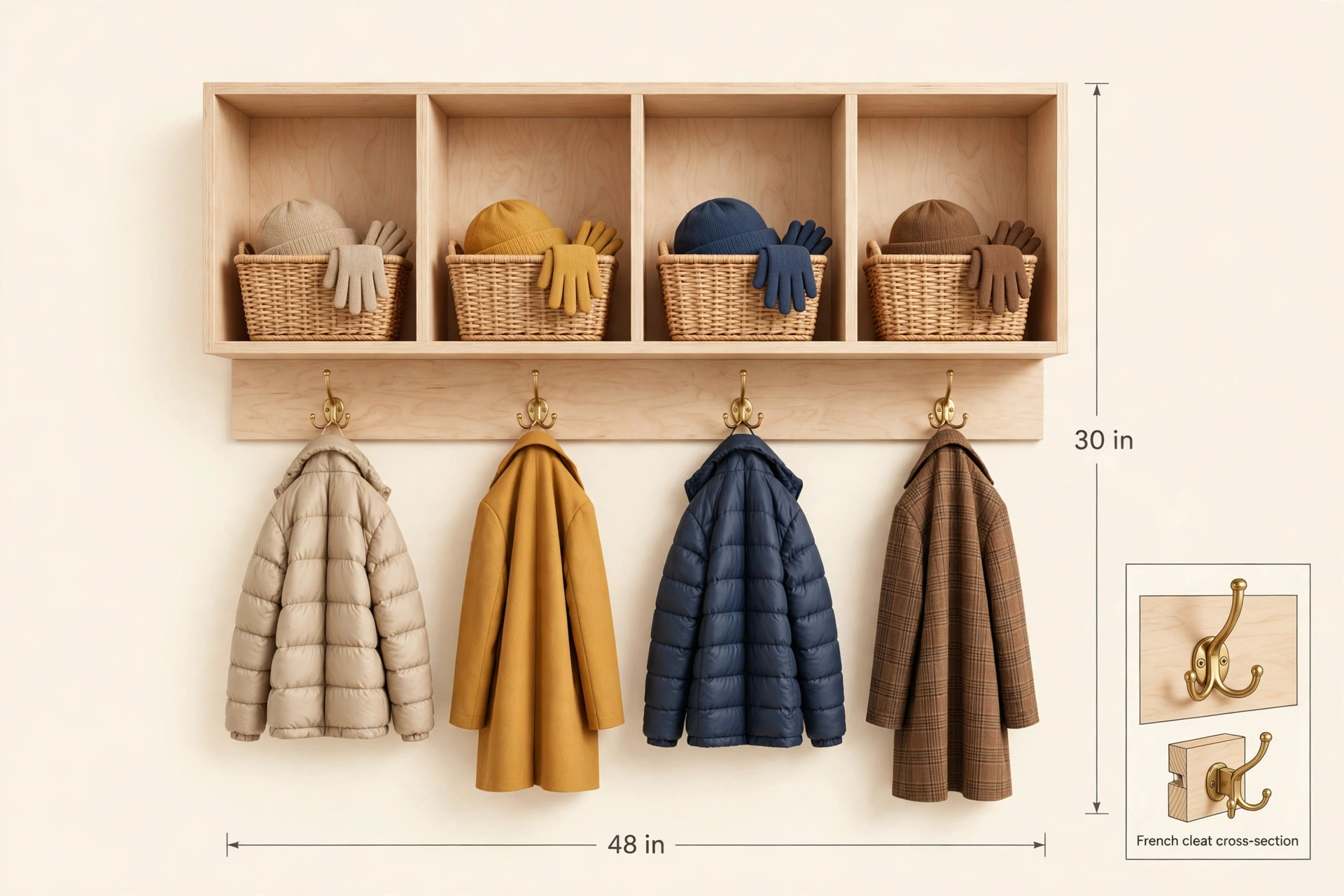
Looking for mudroom cubby shelf with coat hooks plans that give every person in the house one cubby and one hook? This free DIY plan builds a 48 in wall unit with four cubbies on top and four double hooks on a rail below — hats and gloves up top, coats underneath, and the whole thing hangs on a French cleat, so it comes off the wall cleanly. One weekend, one and a half sheets of plywood, and the entryway pile-up is over.
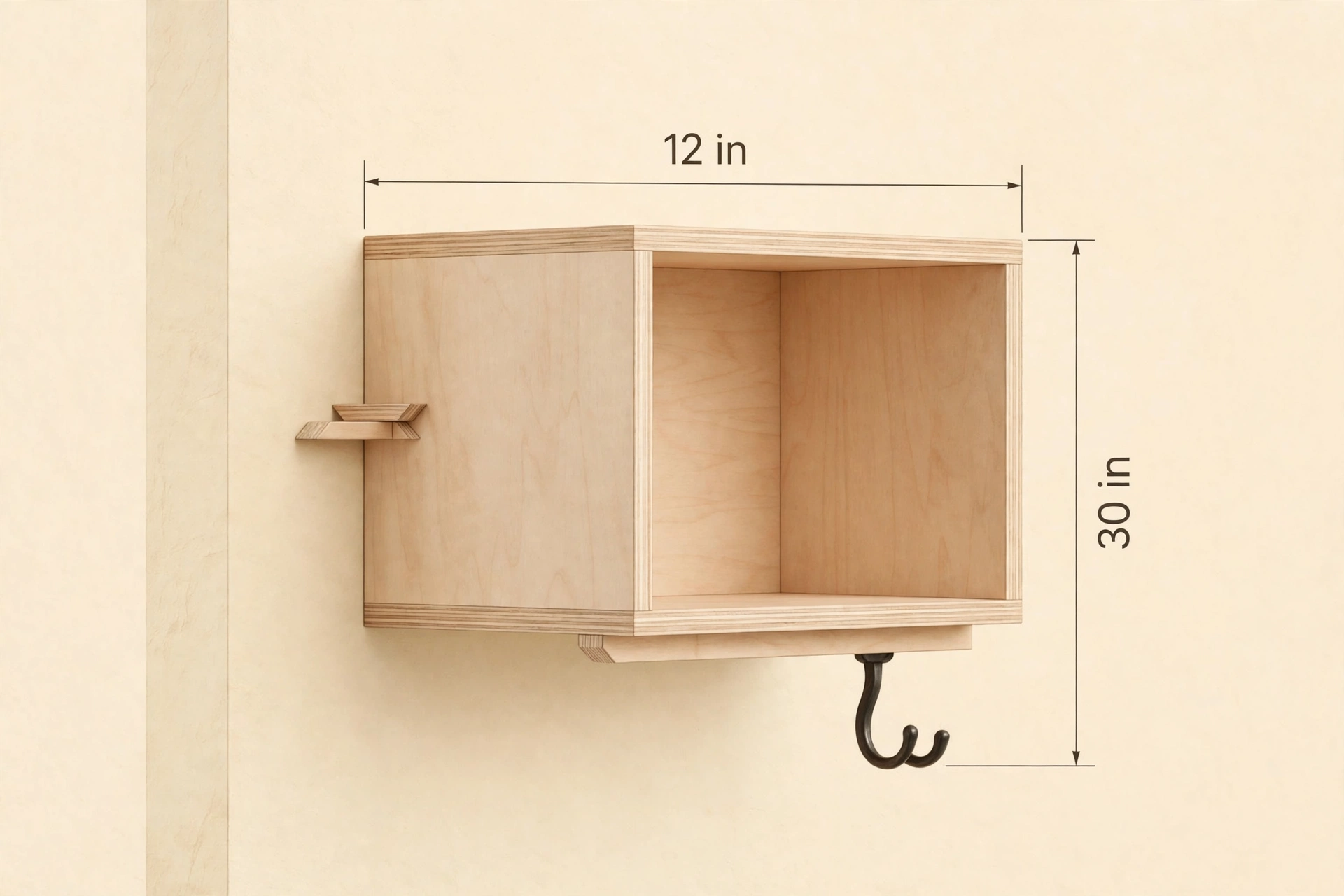
Difficulty: Beginner · Time: One weekend · Finished size: 48 in W × 12 in D × 30 in H · Cubbies: 4 · Hooks: 4 double hooks · Cost: $95–$150
Project Overview
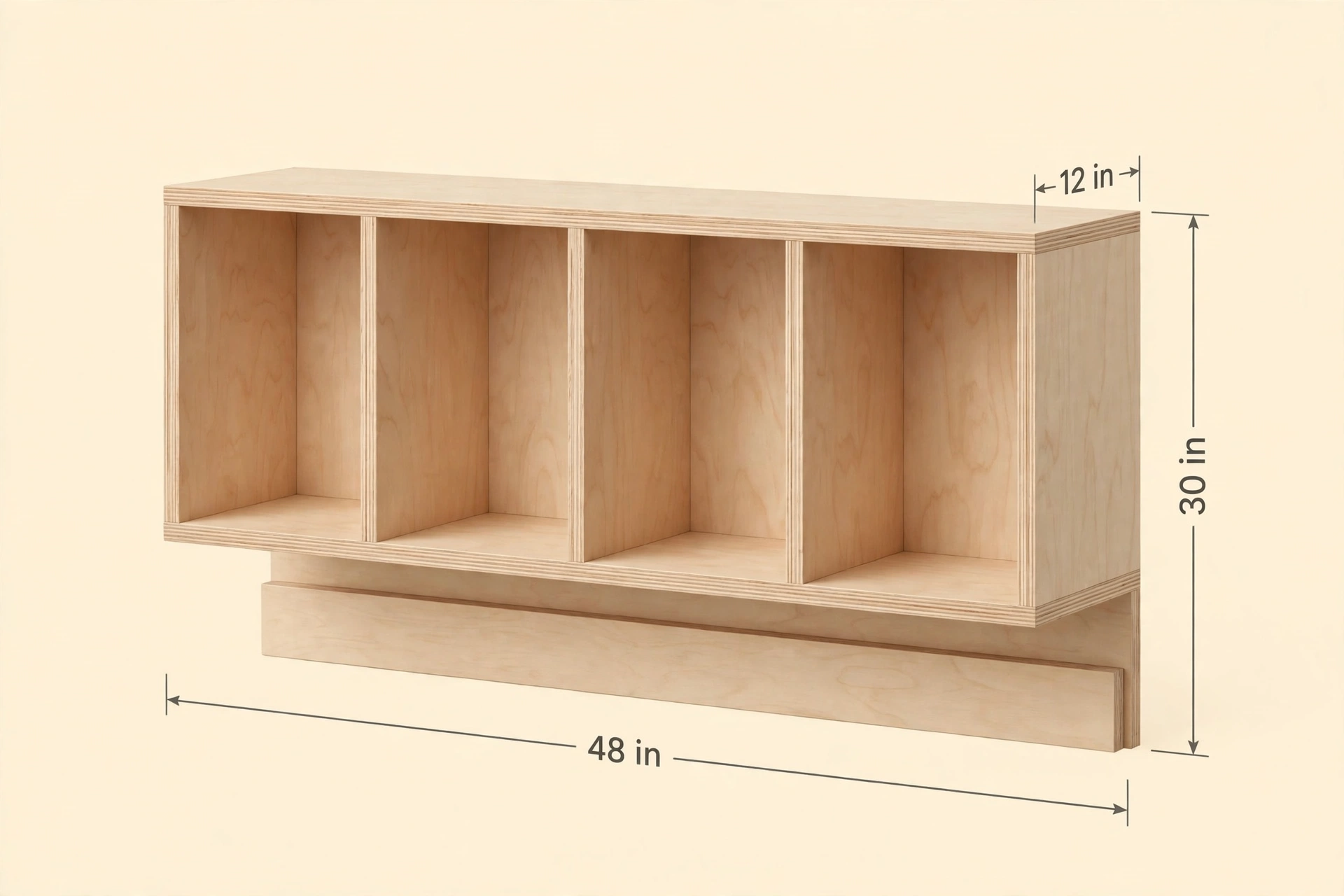
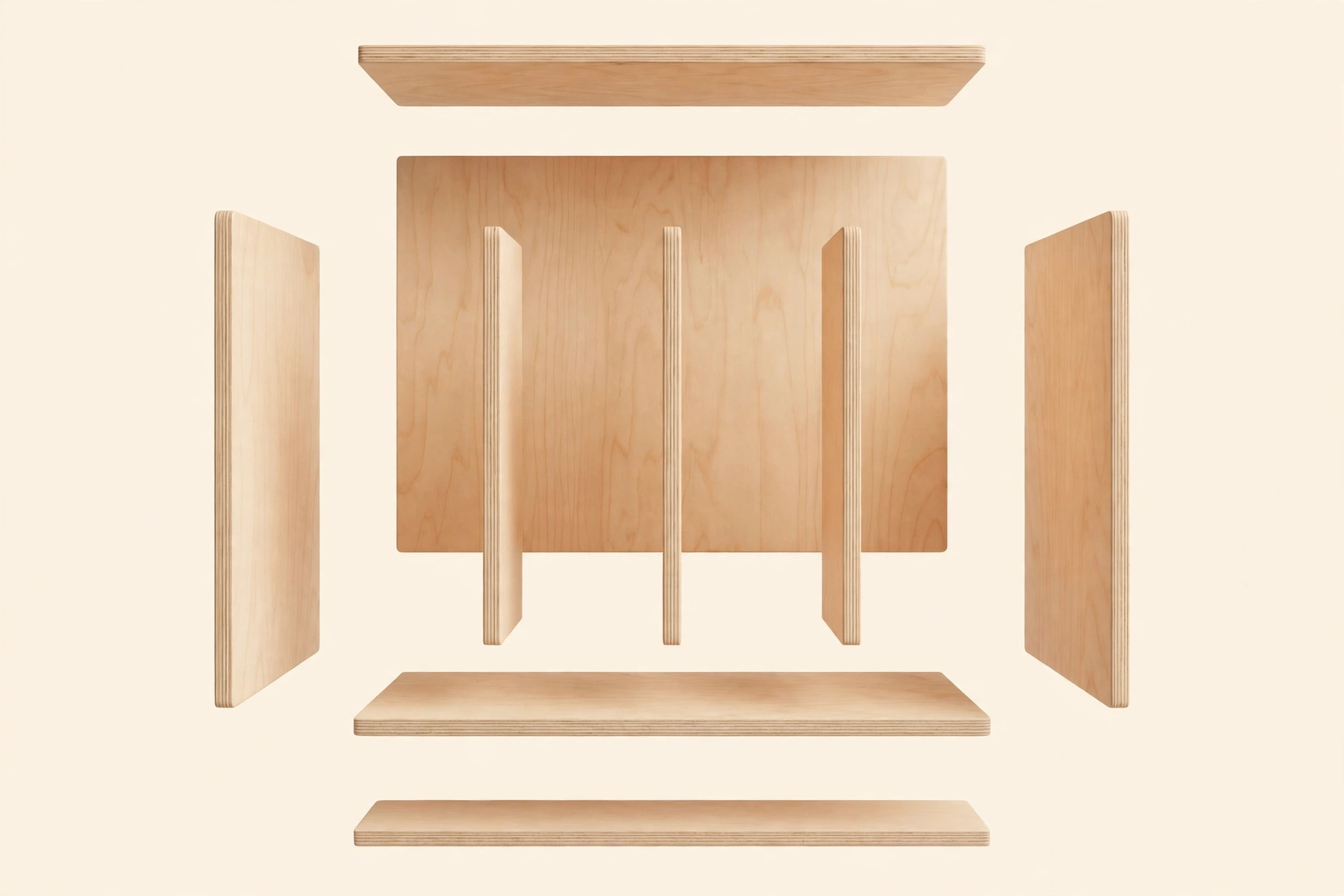
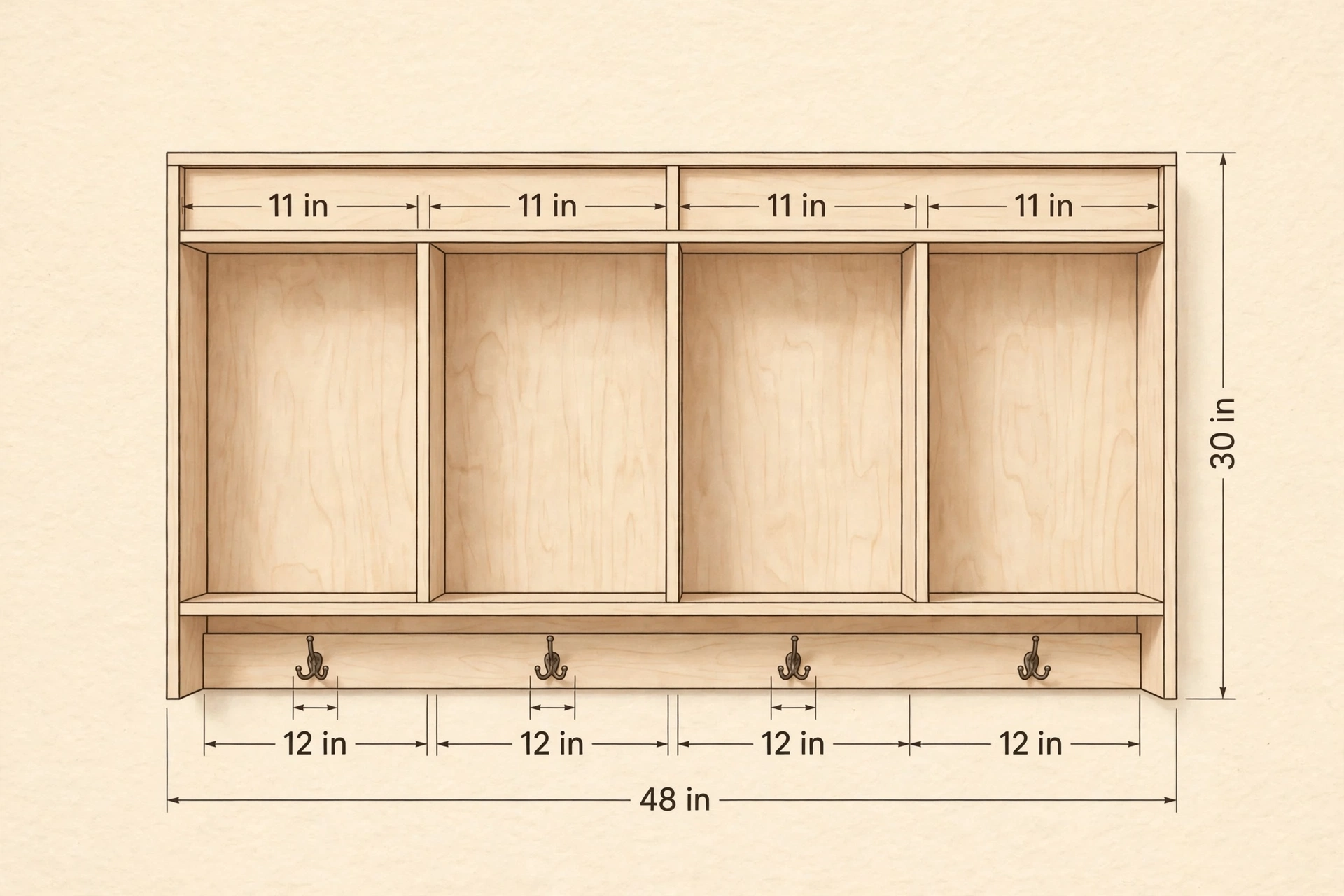
The unit is a plywood cubby box — top, bottom, two sides, three dividers — with a 6 in hook rail screwed underneath. Each cubby is about 11 in wide and 22-1/2 in tall, sized for a basket, a hat and gloves. The hook rail carries four double hooks at 12 in centres, one under each cubby, so each person’s coat hangs below their own cubby. The unit hangs on a 46 in French cleat screwed into two studs.
All dimensions are in inches. Hang the unit with the cubby bottoms at about 54 in from the floor — high enough for coats to hang clear of the floor, low enough for the shortest adult in the house to reach the cubbies.
| Part | Finished size |
|---|---|
| Overall | 48 in W × 12 in D × 30 in H |
| Cubby box | 48 in W × 12 in D × 24 in H |
| Hook rail | 48 in W × 6 in H |
| Cubbies (×4) | 11 in W × 22-1/2 in H each |
| Hooks | 4 double hooks, 12 in on centre |
| French cleat | 46 in W × 3 in H |
New to reading plans? Start with our guide on how to read woodworking plans. Want hooks without the cubbies? Our wall-mounted entryway shelf with hooks is the smaller version of this idea.
Materials & Hardware
Plywood: 1-1/2 sheets of 3/4 in birch or maple plywood (4 × 8 ft) for the cubby box and hook rail · 1 quarter-sheet of 1/4 in plywood for the back panel. Solid wood: 1 × 1×2 in × 8 ft pine or poplar for the top front edge.
Hardware: 4 double coat hooks with screws · 1-1/4 in and 2 in wood screws · wood glue · 120- and 220-grit sandpaper · finish of your choice (polyurethane, hardwax oil, or paint + primer) · 2 × 2-1/2 in screws for the wall cleat · optional: 4 small baskets, about 10 × 10 in, for the cubbies.
Tools: circular saw with a straight-edge guide or table saw, drill/driver, tape measure, square, level, stud finder, clamps.
Complete Cut List
All parts are 3/4 in plywood unless noted. Cut the top and bottom first, then the sides and dividers from the same sheet.
| Part | Qty | Size (in) | Notes |
|---|---|---|---|
| A — Top | 1 | 48 × 12 | Good face up |
| B — Bottom | 1 | 48 × 12 | Same as A |
| C — Sides | 2 | 22-1/2 × 12 | Height between top and bottom |
| D — Dividers | 3 | 22-1/2 × 11-1/4 | 3/4 in short of the back for the back panel |
| E — Back panel | 1 | 46-1/2 × 22-1/2 | 1/4 in plywood |
| F — Hook rail | 1 | 48 × 6 | Screws under the bottom |
| G — French cleat (wall half) | 1 | 46 × 3 | 45° bevel along one long edge |
| H — French cleat (unit half) | 1 | 46 × 3 | 45° bevel, opposite direction |
| I — Top front edge | 1 | 48 × 1-1/2 | 1×2 solid wood |
Check before you cut: the three dividers are 11-1/4 in deep, not 12 — that 3/4 in gap at the back is where the 1/4 in back panel sits. Cut them full depth by mistake and the back panel will not fit flush.
Step-by-Step Instructions
Step 1 — Cut and label. Cut parts A–I and label each in pencil, including “DIVIDER 1/2/3” — the three dividers are identical, but labelling stops you re-measuring. Sand the top and bottom faces now.
Step 2 — Rip the French cleat. Cut a 46 × 6 in strip and rip it at 45° along its length. The two halves interlock: one screws to the wall, one to the back of the unit. Test-fit them on the bench first.
Step 3 — Build the cubby box. Lay the bottom (B) flat and stand the sides (C) at each end, glue first, two screws per side from underneath. Stand the three dividers (D) at 12 in centres — measure from the inside face of the left side: divider centres at 12, 24 and 36 in — and screw them from underneath as well. That gives four cubbies of about 11 in each.
Step 4 — Add the top and back. Set the top (A) on the sides and dividers, flush front and back, and screw down into each one with 2 in screws. Screw the back panel (E) to the rear edges with 1-1/4 in screws every 8 in. Glue the top front edge (I) to the front of the top.
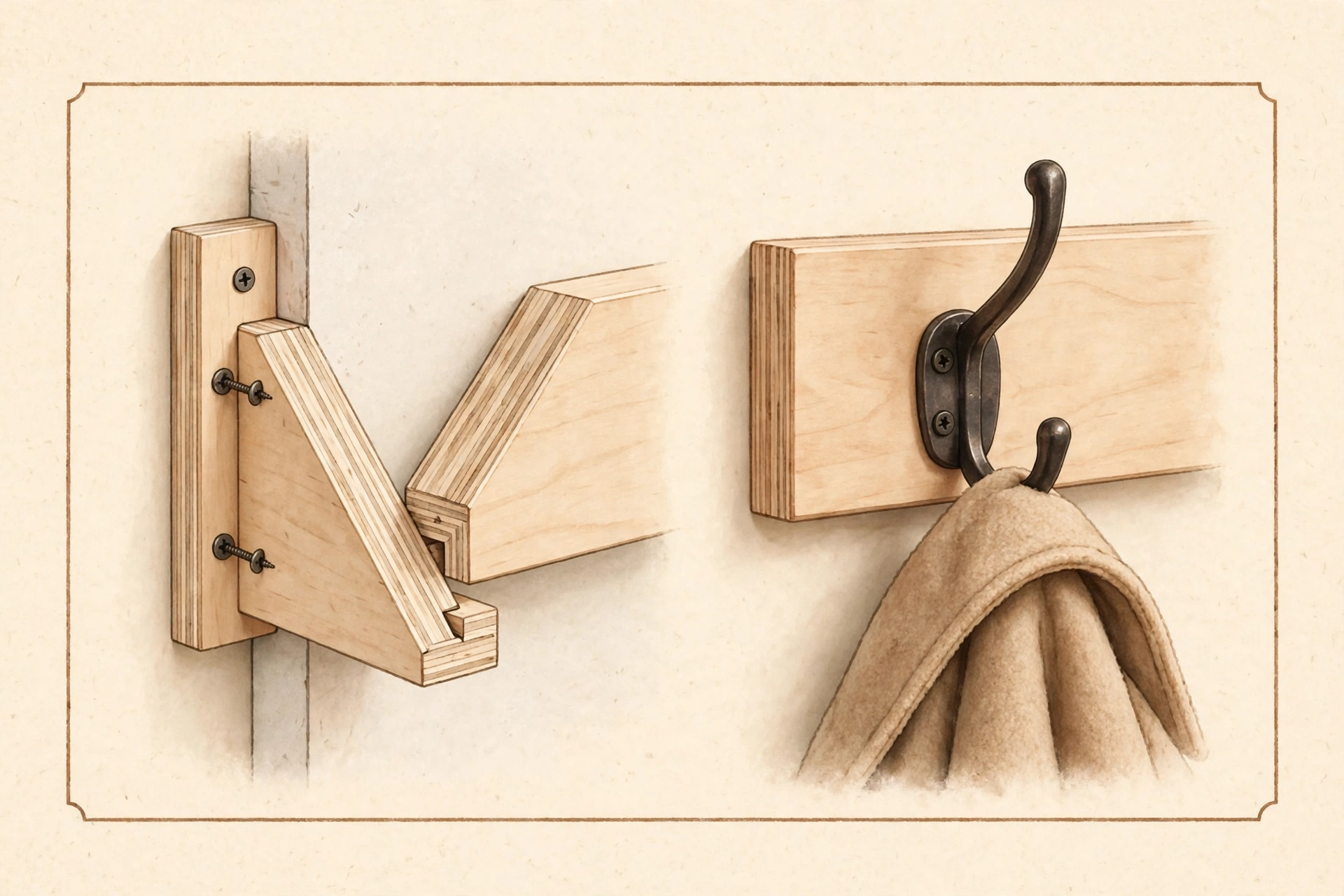
Step 5 — Attach the hook rail and cleat. Screw the hook rail (F) under the bottom (B), flush at the front, with 2 in screws every 8 in. Screw the unit cleat half (H) to the back of the cubby box, bevel facing down and out, its top edge 2 in below the top.
Step 6 — Mount the wall cleat. Find two studs and level the wall half (G) so the cubby bottoms land at about 54 in from the floor — that puts the cleat at roughly 76 in. Drive 2-1/2 in screws into both studs and check level twice.
Step 7 — Hang it, hook it, finish it. Lift the unit onto the wall cleat and let it settle. Mark four hook positions on the rail at 12 in centres (6, 18, 30 and 42 in from the left end), pre-drill and screw each double hook in. Take the unit down, sand 120-grit then 220, apply two coats of finish, refit the hooks, and hang it for good. Drop a basket in each cubby and hang four coats to test.
Common Mistakes
- Dividers cut full depth — the back panel then sits proud of the box and the cleat will not sit flat. Dividers are 11-1/4 in deep for a reason; recheck part D.
- Unit hung too high — the cubbies are unreachable. Measure the shortest user’s reach before drilling; 54 in to the cubby bottoms suits most households.
- Hooks screwed into the rail edge — hooks must go into the face of the 3/4 in rail. Screws in edge grain pull out under a wet winter coat.
- Cleat into drywall only — four coats, four baskets and the unit itself can weigh 40 lb. At least two screws must hit studs.
- Cubbies too narrow for baskets — baskets were bought before measuring. Cubbies are 11 in wide: buy baskets 10 in wide or smaller, or build the unit 60 in wide with the same method.
Safety & Inspection
Anchor into studs, not drywall alone — a loaded mudroom unit can weigh 40 lb or more, and a falling unit with hooks is a hazard. Wear eye and ear protection when cutting plywood, support full sheets so offcuts cannot drop and bind the blade, and test the mounted unit by hanging your full body weight from the rail briefly before trusting it with the family’s coats.
FAQ
How many people does it serve? Four — one cubby and one double hook each. A family of five or six should build the 60 in version: add 12 in to the top, bottom, back, rail and cleat, and add a fourth divider for a fifth cubby.
Can I use it without baskets? Yes — the cubbies work open for hats, gloves and dog leashes. Baskets just hide the clutter.
Will it hold winter coats? Yes, one heavy coat per double hook, about 10 lb per hook. Wet coats go on the hooks, not in the cubbies — the cubbies are not ventilated.
Can I paint it? Yes — prime first, then two coats of semi-gloss paint. Paint shows scuffs less than clear finish in a mudroom that gets daily use.
What if my wall has no studs where I need them? Use 50 lb rated toggle bolts for the cleat as a backup, two per stud bay — but studs are always the first choice, so shift the unit a few inches left or right to catch them.
Save this plan for later — pin it, and tell us in the comments: one cubby per person, or would you rather have fewer, wider cubbies?