Choosing the Right Plywood for Furniture Projects
Choosing the right plywood affects strength, appearance, edge quality and how accurately a furniture project assembles. This guide explains what to inspect before buying a sheet.
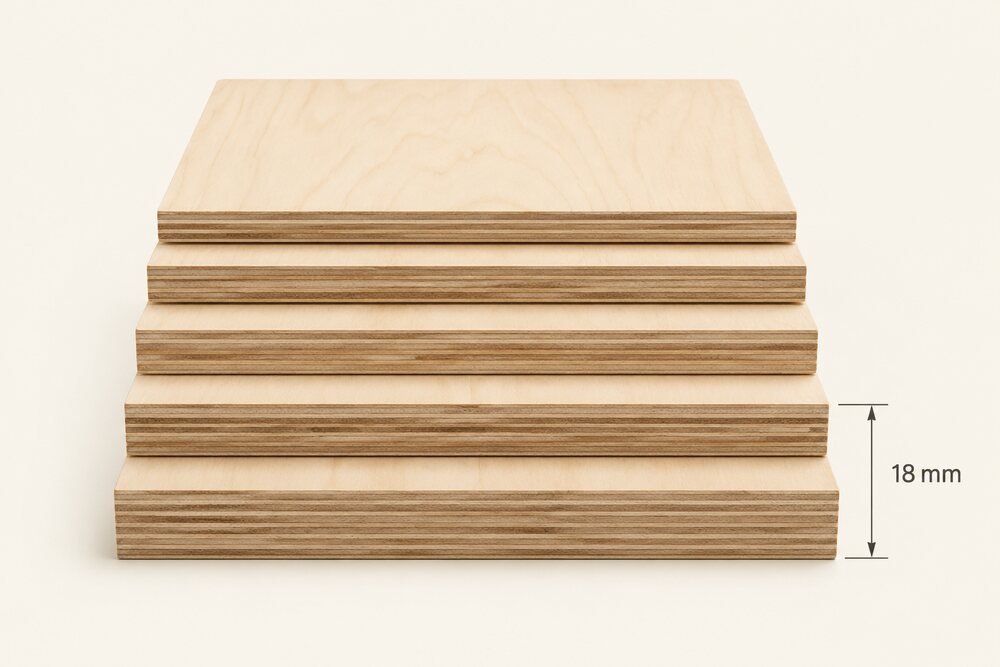
Choosing the right plywood: start with the project
Choosing the right plywood begins with the load, visible surfaces, edge treatment, finish and whether the part must remain especially flat.
Start with the real project in front of you. Record its dimensions, material thickness and intended use. Read the complete guide before making a decision, then test the most important operation on an offcut.
Three checks that prevent rework
- Confirm actual material thickness and the finished outside dimensions.
- Mark related parts from the same reference face and edge.
- Test moving hardware and critical joints on scrap before final assembly.
Choosing the right plywood by core and face grade
When choosing the right plywood, inspect both face veneers and the exposed core; voids, thin outer plies and warped sheets create problems later.
Plywood grades explained
For visible furniture, prioritize a clean face veneer and a flat sheet. Lower grades suit hidden shop fixtures, but voids and patches can create weak exposed edges.
Work from one reliable reference face and compare the part with the drawing before moving on. Check mating pieces together rather than trusting repeated measurements. A short dry fit here is faster than correcting accumulated errors after assembly.
Veneer core versus MDF core
Veneer-core panels are light and hold screws well. MDF-core panels are flatter and machine cleanly but weigh more and dislike moisture.
Work from one reliable reference face and compare the part with the drawing before moving on. Check mating pieces together rather than trusting repeated measurements. A short dry fit here is faster than correcting accumulated errors after assembly.
Choosing the correct thickness
Use 3/4-inch material for most cabinet bodies, 1/2-inch for lighter dividers and 1/4-inch for backs captured in grooves. Confirm actual thickness before cutting joinery.
Work from one reliable reference face and compare the part with the drawing before moving on. Check mating pieces together rather than trusting repeated measurements. A short dry fit here is faster than correcting accumulated errors after assembly.
Inspecting sheets before buying
Sight along both long edges, reject twisted sheets and inspect the core for gaps. Compare color and grain when adjacent panels will be visible together.
Work from one reliable reference face and compare the part with the drawing before moving on. Check mating pieces together rather than trusting repeated measurements. A short dry fit here is faster than correcting accumulated errors after assembly.
Cutting and finishing exposed edges
Support the full sheet, use a sharp blade and score fragile veneer when necessary. Cover exposed plies with solid edging, veneer tape or a deliberate rounded detail.
Work from one reliable reference face and compare the part with the drawing before moving on. Check mating pieces together rather than trusting repeated measurements. A short dry fit here is faster than correcting accumulated errors after assembly.
Choosing the right plywood by price alone can lead to chipped edges, telegraphed core voids or panels that will not stay flat.
Common mistakes to avoid
- Starting before checking the available space, finished dimensions and material thickness.
- Measuring connected parts from different reference edges.
- Skipping a complete dry fit before glue or final hardware installation.
- Forcing an assembly into square instead of finding the inaccurate part.
- Ignoring the instructions supplied with tools and hardware.
Final quality check
Inspect the work from every side on a flat surface. Confirm that moving parts travel freely, fasteners are secure, exposed edges feel smooth and the finish is fully cured. Recheck critical fixings after the first period of normal use.
Safety
Wear suitable eye and hearing protection, support every workpiece securely and disconnect power before changing blades or bits. Use dust collection or a suitable respirator where required. Ask a qualified person to check wall-mounted or load-bearing work whenever the substrate, fixing method or expected load is uncertain.
Choosing the right plywood is a project-specific decision: cabinet boxes, painted panels, drawer bottoms and clear-finished tops do not need the same grade.
For general machine and workshop hazards, consult the OSHA woodworking safety guide.
Frequently asked questions
Can the dimensions be changed?
Yes, but update every connected part together. Recheck hardware clearances, symmetry, material spans and the order of assembly before cutting.
Is this suitable for a beginner?
A careful beginner can use this guide by practicing critical cuts on scrap and dry-fitting each stage. Ask an experienced woodworker to review structural, moving or wall-mounted connections.